Five Secrets to Choosing Safer Baby Food Pouches
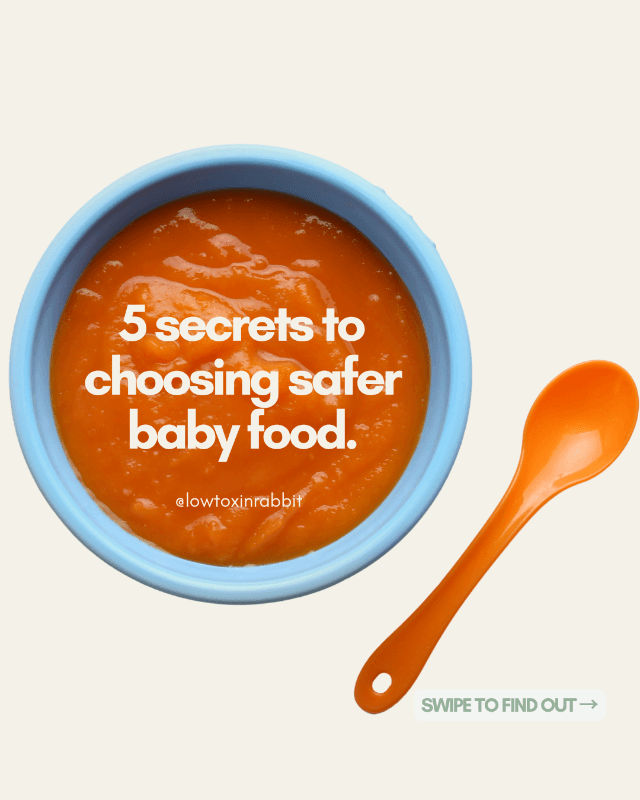
Baby food pouches look reassuringly simple. A few fruits, maybe a vegetable, sometimes a grain. But the ingredient lists on many commercial products tell a more complicated story, one that includes synthetic vitamins your baby's gut may not absorb well, heavy metal contamination that's been repeatedly flagged by food safety researchers, and a fruit-heavy formulation that skews sweet from the very first meal.
None of this means every pouch is dangerous. But if you're feeding your baby commercial food without knowing what's in it or where it comes from, it's worth understanding what the research actually shows.
The Heavy Metal Problem
Heavy metal contamination in commercial baby food has been documented by multiple independent investigations. A 2021 report by the US House of Representatives Subcommittee on Economic and Consumer Policy found that four major baby food manufacturers had significant levels of arsenic, lead, cadmium, and mercury in their products. Some products tested contained arsenic levels over 90 times the limit the US FDA allows in bottled water.
This isn't purely a US issue. The contamination largely comes from the ingredients themselves. Rice is a particularly efficient accumulator of inorganic arsenic from soil and water. Sweet potato, carrots, and fruit concentrates can carry lead and cadmium depending on growing conditions and soil quality. Any product that concentrates these ingredients through cooking and pureeing also concentrates whatever heavy metals were present in the raw ingredients.
The third quarter results of the 2024 NZ Total Diet Study (Infants and Toddlers) support this locally. Of all infant food categories tested, rice-based snacks including rice rusks and rice cakes showed the highest levels of both arsenic (up to 0.16 mg/kg) and cadmium (up to 0.017 mg/kg), significantly above the less than 0.01 mg/kg recorded across most other categories. Mercury, lead, and PFAS compounds were below detectable limits across all infant food categories, a reassuring finding, but one that doesn't change the picture for rice-based products specifically. The full NZ Total Diet Study is expected to be released mid-2026 so we will have an even better picture then.
The concern with infants is that their blood-brain barriers are still developing. Even low-level chronic exposure to heavy metals like arsenic during this window has been linked to neurodevelopmental effects in peer-reviewed research. A 2025 systematic review found that higher arsenic exposure correlates with lower IQ scores, slower processing speeds, and impairments in memory and language skills.
High-risk ingredients to watch for include rice-based snacks and cereals (rice rusks, rice cakes, rice puffs), sweet potato-heavy blends, and products using fruit juice concentrates. Rotating ingredients and choosing varied whole food options is one of the simplest ways to reduce cumulative exposure.
Synthetic Vitamins and Why They're Added
Many commercial baby foods are fortified with synthetic vitamins. You'll see these listed as ascorbic acid (synthetic vitamin C), retinyl palmitate (synthetic vitamin A), or a string of B vitamins like thiamine mononitrate, riboflavin, and pyridoxine hydrochloride. They're added partly to compensate for nutrients lost during the high-heat processing that gives pouches their long shelf life, and partly to make the nutritional panel look more impressive.
The issue is that synthetic vitamins are not the same as the naturally occurring versions in whole foods. Many require cofactors, enzymes, and gut bacteria to be properly absorbed, and a baby's digestive system is still developing all of these. Folic acid, for instance, is the synthetic form of folate. Research estimates that up to 40-60% of the population carries a variant of the MTHFR gene that reduces the body's ability to convert folic acid into the active form it can actually use. The naturally occurring folate in whole foods like leafy greens and legumes doesn't carry this problem.
High-dose synthetic vitamin A (retinyl palmitate) in fortified products can also accumulate in the body, since vitamin A is fat-soluble. Whole food sources like cooked sweet potato and egg yolk provide beta-carotene, which the body converts to vitamin A only as needed, making toxicity essentially impossible from food alone.
The honest reality is that if the base ingredients are high quality and varied, most babies eating a reasonably diverse diet don't need fortified products. Synthetic vitamins in baby food are largely a commercial solution to a commercial problem.
The Hidden Sugar Load
Turn over most baby food pouches and you'll find the first three or four ingredients are fruits. Apple, pear, banana, and mango regularly appear together in a single product. Each of these is individually a high-sugar food. Together, they create a product that's extremely sweet, even if no added sugar is listed on the label.
This matters because the window between roughly four and twelve months is when taste preferences are being formed. Research suggests that a diet high in added sugars during the first year may be associated with a stronger preference for sweet foods in the toddler and preschool years. While the science on sweet exposure broadly is still evolving, what we do know is that repeatedly offering sweet-tasting food is how a baby learns to expect food to taste that way and that threshold, once set early, is harder to shift.
It also crowds out the vegetables. Bitter, earthy, and savoury flavours require repeated exposure to become accepted. If a baby's first six months of solids is mostly sweet fruit blends, introducing broccoli, kale, or lamb later becomes a much harder sell. Children typically need between 6 and 15 exposures to a new food before they accept it, which means every pouch of apple and mango is a missed opportunity to build that familiarity with something harder to love.
Products marketed as "vegetable" pouches are often not much better. Apple or pear almost always appears near the top of the ingredient list, even when the pouch is labelled spinach and pear or carrot and apple. The fruit is doing the heavy lifting on flavour, not the vegetable.
Additives and Preservatives to Watch For
Preservatives in baby food are less common than in adult processed food, but additives still appear. Ascorbic acid is frequently added as both a synthetic vitamin and a preservative. Citric acid is used to lower pH and extend shelf life. Neither is acutely dangerous, but neither belongs in a first-foods diet that's supposed to be simple whole food.
Thickeners like maltodextrin and modified starch turn up in some products, particularly the cheaper ranges. Maltodextrin has a glycaemic index higher than table sugar, meaning it raises blood glucose faster. For a developing infant, that's not a useful thing to include in what's being sold as nutritious food.
Some products also include "natural flavours", which under most food labelling laws is a broad category that can encompass a large number of flavour compounds. It doesn't necessarily indicate anything harmful, but it does indicate the product is being engineered for palatability rather than simply being food.
Five Secrets to Choosing Safer Baby Food Pouches
Making your own is genuinely the most reliable option. You control the ingredients, there's no packaging, no preservatives, and no mystery of what is actually in it. Steamed and blended vegetables, cooked egg, mashed avocado, bone broth-thinned purees, and soft-cooked fish and meat are all excellent early foods. A stick blender and some ice cube trays for batch cooking will take you a long way. I have also found the Smart Baby Cookbook and Baby Food Bible great resources for where to start and meal ideas.
-1775468351902.png)
However, if you are unable to make your own it is or simply want convivence (I get it I am a Mum of four) it is important you always turn over the baby food pouch before buying and read the ingredient list. Here are a few principles we follow to make it simpler.
The fewer the ingredients, the better. If you can picture every single ingredient as a whole food you'd find in your kitchen, that's a reasonable sign. If the ingredient list includes anything you'd need a chemistry reference to identify, put it back.
Look at where fruit appears in the order. Ingredients are listed by weight, so if apple or pear is the first or second ingredient in a product labelled as a vegetable blend, the vegetable is present in a supporting role at best. Seek out products where vegetables or proteins are listed first on the ingredient list.
Choosing Organic gives reassurance that your little one will not be exposed to synthetic pesticides. It is important to choose organic where you can as 2023 Environmental Working Group analysis found pesticide residues on a significant proportion of non-organic baby food products tested. To reduce heavy metal exposure also best to avoid rice-based snacks and cereals (rice rusks, rice cakes, rice puffs), sweet potato-heavy blends, and products using fruit juice concentrates.
Short shelf life and refrigeration requirements are actually a positive signal. A product that lasts three days in the fridge hasn't been heavily processed or preserved. A product with an 18-month shelf life at room temperature has been processed enough to kill virtually everything in it, including many of the nutrients it claims to contain.
-1775468136976.png)
Better Baby Food Options
For times when convenience matters, there are brands doing it better. Odi Nutrition* is a NZ-made product worth knowing about. It uses whole food ingredients and is formulated to actually reflect what babies need nutritionally, without leaning on fruit-heavy blends or synthetic fortification as shortcuts. They ship worldwide.
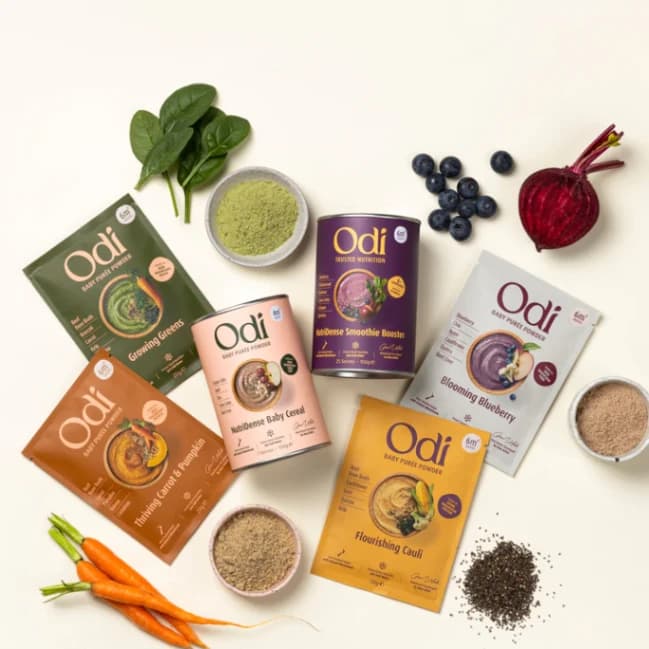
*Affiliate link
Made Whole is another brand that prioritises nutrient density and whole food sourcing. Their products include organ meats and bone broth-based options, which provide genuinely bioavailable iron and zinc in a way that fruit laden pouches never can. They deliver to Tauranga, Auckland, Hamilton, Whakatāne, Taupō, Rotorua and Waikato.
Little Harvesters is another brand worth knowing about. Their Australian made pouches are high in fat and protein, exactly what babies actually need, and each one contains bone broth, superfoods, healthy oils and organic veggies. Formulated with input from a paediatric dietitian, they skip the cheap fillers, added sugars, sugary fruits, preservatives and GMOs. They are a great nourishing option for little people and they ship worldwide!
-1775468484842.png)
If you're doing baby-led weaning (BLW) rather than purees, the same principles apply to finger foods. Avoid products with added salt, sugar, or maltodextrin. Rice puffs and rice rusks, however popular, are among the highest-risk products for heavy metal exposure and offer almost no nutritional value. Better alternatives include strips of soft-cooked vegetables, pieces of ripe banana or avocado, shredded meat, or small pieces of well-cooked egg.
What to Prioritise in the First Year
The first year of solids is less about meeting precise nutritional targets through food and more about building familiarity with real flavours and textures. Breast milk or formula continues to provide the majority of nutrition until around 12 months. That context matters because it means the goal of early solids isn't to fortify your baby with synthetic vitamins. It's to introduce variety, especially bitter and savoury flavours, and to begin building the gut microbiome diversity that comes from encountering a range of whole foods.
Iron is the one nutrient that warrants real attention from around six months because breast milk is relatively low in iron and infant iron stores begin to deplete. The most bioavailable iron sources are animal-based: red meat, liver, egg yolk, and oily fish. Non-haem iron from plant sources like lentils and spinach is absorbed much less efficiently. A diet of fruit pouches with synthetic iron added does not solve this problem in the same way that actual meat does.
Keeping things simple and varied, leaning towards whole foods over packaged products, and rotating through different vegetables, proteins, and grains will serve your baby far better than any carefully branded pouch.
Summary
Heavy metal contamination is well documented in commercial baby food, particularly in rice-based and sweet potato-heavy products.
Synthetic vitamins added to compensate for processing losses are not equivalent to vitamins from whole food sources.
Most commercial pouches are fruit-forward by design, which skews sweet and shapes early taste preferences.
Look for short ingredient lists, recognisable whole food ingredients, and products where vegetables or protein lead rather than fruit.
Making your own purees and finger foods remains the most reliable way to control what your baby eats.
When buying commercial products, brands like Odi, Made Whole, and Little Harvesters prioritise whole food nutrition over sweetness and shelf life.
Prioritise iron-rich animal foods from six months rather than relying on synthetic fortification.
References
Ministry for Primary Industries. (2024). Third quarter results of the 2024 NZ Total Diet Study (Infants and Toddlers). New Zealand Government.
US House of Representatives Subcommittee on Economic and Consumer Policy. (2021). Baby Foods Are Tainted with Dangerous Levels of Arsenic, Lead, Cadmium, and Mercury. https://oversightdemocrats.house.gov/imo/media/doc/ECP%20Second%20Baby%20Food%20Report%209.29.21%20FINAL.pdf
Tian, Y., Hou, Q., Zhang, M., Gao, E., & Wu, Y. (2025). Exposure to arsenic and cognitive impairment in children: A systematic review. PLoS ONE, 20(2), Article e0319104. https://doi.org/10.1371/journal.pone.0319104
Collado-López, S., Rodríguez Hernández, M. F., Mariscal-Moreno, R. M., Téllez-Rojo, M. M., Betanzos-Robledo, L., Reyes Luna, M., & Cantoral-Preciado, A. (2025). Concentrations of heavy metals in processed baby foods and infant formulas worldwide: A scoping review. Nutrition Reviews, 84(2), 448–461. https://doi.org/10.1093/nutrit/nuaf138
Drewnowski, A., Mennella, J. A., Johnson, S. L., & Bellisle, F. (2012). Sweetness and food preference. The Journal of Nutrition, 142(6), 1142S–1148S. https://doi.org/10.3945/jn.111.149575
Liem, D. G., & Mennella, J. A. (as cited in van der Haar, S., et al., 2023). Sweet tooth of infancy: Is sweetness exposure related to sweetness liking in infants up to 12 months of age? PMC/NCBI. https://pmc.ncbi.nlm.nih.gov/articles/PMC10024975/
Dazeley, P., & Houston-Price, C. (as cited in Nekitsing, C., et al., 2017). Early taste experiences and later food choices. PMC/NCBI. https://pmc.ncbi.nlm.nih.gov/articles/PMC5331538/
Beauchamp, G. K., & Mennella, J. A. (2013). Early influences on the development of food preferences. Current Biology, 23(9), R401–R408. https://www.cell.com/current-biology/fulltext/S0960-9822(13)00208-X
Environmental Working Group. (2023). Pesticides still found in baby food, but biggest toxic threats eliminated. https://www.ewg.org/research/pesticides-still-found-baby-food-biggest-toxic-threats-eliminated
Froese, D. S., Huemer, M., Suormala, T., et al. (2023). The implication of a polymorphism in the methylenetetrahydrofolate reductase gene in homocysteine metabolism and related civilisation diseases. International Journal of Molecular Sciences, 25(1), 193. https://www.mdpi.com/1422-0067/25/1/193
Food Standards Australia New Zealand (FSANZ). (2020). Arsenic. https://www.foodstandards.gov.au
Frequently Asked Questions
What baby food pouches have the least heavy metals?
No commercial pouch brand has been independently verified as completely free of heavy metals, since contamination largely comes from the soil ingredients are grown in. Your best strategy is to choose products with short, whole-food ingredient lists, avoid rice-based products, rotate ingredients frequently, and make homemade purees when possible. Brands that use certified organic, locally sourced ingredients and have transparent testing policies are generally a safer choice.
What is the healthiest brand of baby food in NZ and Australia?
Odi Nutrition, Made Whole and Little Harvesters are among the better options available in New Zealand. Both prioritise whole food ingredients over fruit-heavy formulations and avoid synthetic additives. Made Whole is also worth considering for its nutrient-dense, animal-food-inclusive approach. That said, homemade purees from fresh whole ingredients remain the most reliable option for controlling exactly what goes into your baby's food.
When can babies start eating food pouches?
Most health guidelines recommend introducing solids at around six months, though some babies show readiness signs slightly earlier. Pouches can be a convenient option but shouldn't form the majority of a baby's diet. They're best used as a supplement to whole food meals rather than a replacement, partly because pouch feeding bypasses the chewing and texture experience that supports oral development.
Are organic baby food pouches safer from heavy metals?
Organic certification reduces pesticide exposure, which is a genuine benefit. However, heavy metals like arsenic and lead occur naturally in soil and water, so organic certification does not guarantee lower heavy metal levels. Some research has found similar heavy metal levels in organic and conventional baby food products. Rotating ingredients and limiting high-risk foods like rice-based products is more effective for reducing heavy metal exposure than choosing organic alone.
How do I avoid too much sugar in baby food?
Check the ingredient list and look at where fruit appears. Ingredients are listed by weight, so if apple, pear, or banana is the first or second ingredient, the product is predominantly fruit by volume regardless of what the front label says. Look for products where vegetables, legumes, or protein lead the list. Better still, make your own purees using mostly vegetables and animal-based products like bone broth, slow cooked red meat, chicken or fish. We always introduced fruit in smaller amounts alongside savoury foods a little later on when starting solids.
What are the best first foods for a baby starting solids?
Good first foods include soft-cooked and pureed vegetables like pumpkin, courgette, parsnip, and broccoli, mashed avocado, cooked egg yolk, pureed chicken or red meat, and bone broth (perfect add to puree vegetables and meat). We found doing slow cooks meats great. From around six months, iron-rich foods like red meat and egg yolk are particularly important as infant iron stores begin to deplete. Avoid rice cereals, products with added salt or sugar, and anything with a long shelf life at room temperature.

.png&w=828&q=75&dpl=dpl_GmiU14p87zrv8k1ZHC4df9Vg82K5)
.png&w=828&q=75&dpl=dpl_GmiU14p87zrv8k1ZHC4df9Vg82K5)