Non-Toxic Kettles: How to Choose a Safe Kettle and the Best Options Available
.png&w=3840&q=75&dpl=dpl_GmiU14p87zrv8k1ZHC4df9Vg82K5)
Most people boil their kettle multiple times a day without giving it a second thought. But if your kettle has a plastic interior or plastic components in contact with boiling water, it's likely releasing chemicals directly into whatever you're about to drink. For something used this frequently, it's worth taking a closer look at what your kettle is actually made of.
Why Your Kettle Material Matters
Plastic is the main concern here. When plastic parts come into contact with boiling water, they can leach a range of chemicals including BPA (bisphenol A), BPS, phthalates, and other compounds from the plastic manufacturing process. These chemicals are endocrine disruptors, meaning they interfere with hormone function in the body.
-1777173353857.png)
Your kettle could be an overlooked source of microplastics and nanoplastics in your daily routine. A 2025 study found that boiling water in a polypropylene kettle releases significant concentrations of microplastics and nanoplastics into your water with every use, and what's worse, the exposure is ongoing even after hundreds of boils. A new plastic kettle releases around 3 billion microplastic particles into a single cup of tea, and even after hundreds of boils, you're still drinking 205 million per cup.
Even kettles marketed as BPA-free are not necessarily safe. BPA replacements like BPS and BPF have shown similar hormonal disruption effects in research. The "BPA-free" label tells you one chemical has been removed, not that the plastic is inert.
Beyond plastics, some cheaper kettles use materials like nickel-coated heating elements or low grade metals that can corrode over time. The inner lining, spout solder points, and lid seal are all worth thinking about, not just the body of the kettle.
What to Avoid
Kettles with any plastic on the interior are the main ones to avoid. This includes kettles where the filter, the body, or the area around the heating element is made of plastic. Many kettles that appear to be stainless steel on the outside still have a plastic interior, so it's worth looking at product descriptions carefully or checking in with the retailer.
Also worth avoiding are kettles with thick solder seams on the inside of the spout. Solder can contain lead, and while many modern kettles use lead-free solder, the connection point inside a spout is a spot where you can't always verify the materials used.
Glass kettles that use a low quality or undefined type of glass are worth being cautious about too. Standard glass can crack under the thermal stress of repeated boiling. Borosilicate glass handles heat changes significantly better and is the one you want.
What Makes a Kettle Low Tox
The two materials that work well for kettles are borosilicate glass and stainless steel. Both are non-reactive with hot water and neither leaches measurable chemicals under normal use.
Borosilicate glass is the same material used in laboratory glassware precisely because it's thermally stable and chemically inert. You can see through it, which is a practical bonus, and it doesn't retain flavours or odours. The limitation is that glass kettles are heavier and more fragile than stainless steel, and a dropped kettle can shatter.
Stainless steel, specifically 18/8 or 304 grade, is durable, light, and doesn't react with water. It's worth checking that the interior is fully stainless with no plastic lining and that the spout is also stainless. Some stainless steel kettles are let down by a plastic filter or lid lining that still comes into contact with the steam or water.
-1776936533147.png)
Good Options to Look At
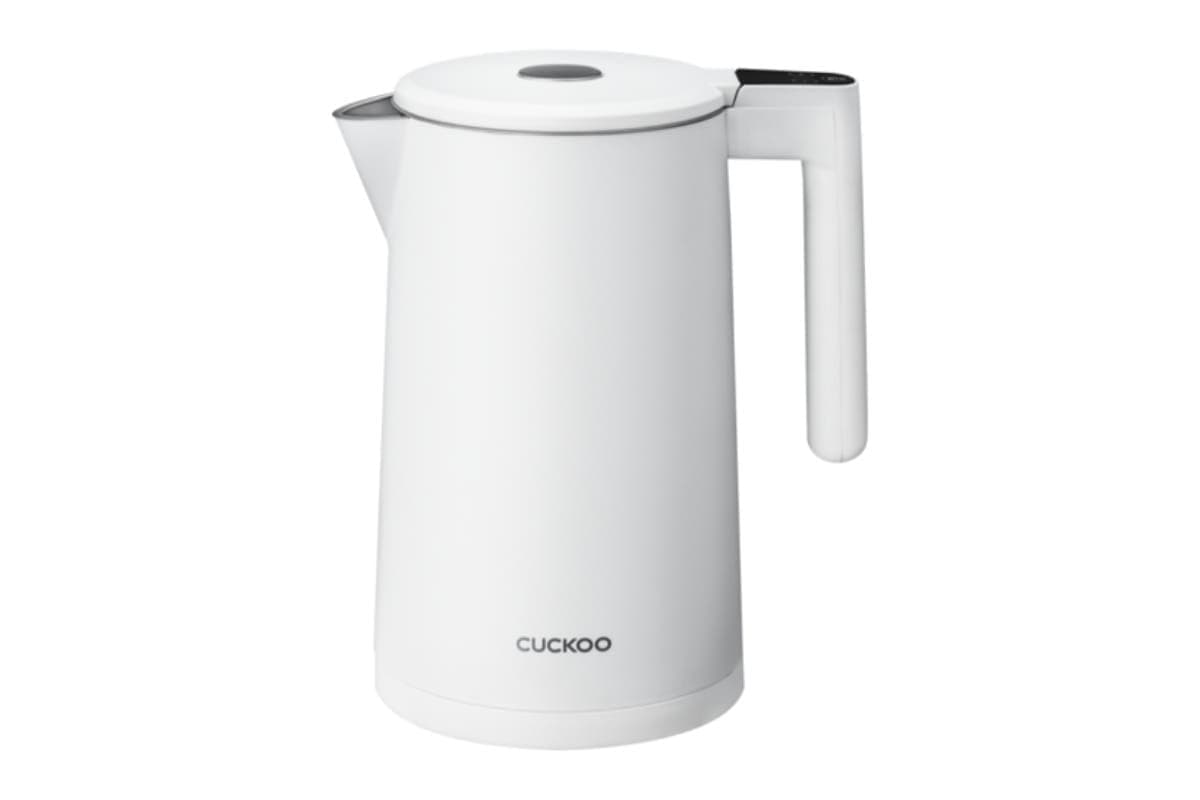
There are some solid options available in NZ and Australia, across a range of price points. Many of these brands are all sold across North America and Europe, sometimes under different brands.
).png&w=3840&q=75&dpl=dpl_GmiU14p87zrv8k1ZHC4df9Vg82K5)
)%2520(1).png&w=3840&q=75&dpl=dpl_GmiU14p87zrv8k1ZHC4df9Vg82K5)
)%2520(2).png&w=3840&q=75&dpl=dpl_GmiU14p87zrv8k1ZHC4df9Vg82K5)
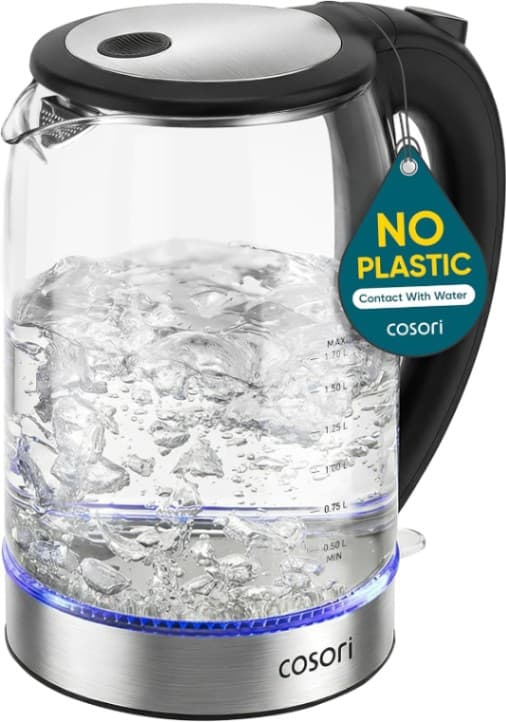
Philips 7000 & 5000 Series Double Walled Kettle
Available on Amazon Australia, these double-walled kettles keep the exterior cooler to touch, which is useful if you have young children around. The double wall design means less heat loss too. Both have a full 304 stainless steel interior, making them a great low tox kettle option.
Healthy Choice 1.2L Digital Glass Kettle with Tea Infuser
This is a glass bodied kettle with an integrated tea infuser, available from a few retailers including Amazon Australia. At 800W and 1.2L it's on the smaller side, which suits households of one or two people. It is made of borosilicate glass, which is a great low tox, inert material. It also includes a stainless steel tea infuser, which is a practical addition if you brew loose leaf.
Westinghouse 1.7L Brushed Stainless Steel Kettle
This one is available at Harvey Norman NZ and it is stainless steel on the inside. It's a straightforward, no-frills option at a reasonable price point. If you're just after a basic low tox upgrade without spending a lot, this is a practical starting point. It's worth confirming with the retailer that no plastic components are in direct contact with water in the current model, as specifications can change between production runs.
Zip Stellar Kettle Brushed 1.7 Litre
Made of 304 stainless steel, the Zip kettle is an affordable option from Briscoes when on sale. It has a stainless-steel interior and spout, and an internal water gauge, so there's no need for water to contact plastic, unlike most kettles with external water gauges where unnecessary plastic contact occurs.
Baccarat The Boiling Point TempControl Kettle
This is the kettle we own and love. The interior is fully stainless steel (apart from a small silicone seal surrounding the temperature control component, which is common across temperature-controlled options and near impossible to avoid). The spout is attached externally rather than soldered internally, meaning there's no solder joint inside the water path, which removes one of the less visible concerns with conventional kettles. Available in Australia directly from the Baccarat site. It also has temperature control, which is useful if you're brewing green or white tea that doesn't benefit from fully boiling water.
Fellow Stagg EKG Electric Kettle
The Fellow Stagg EKG is a stainless steel pour-over style kettle with a narrow gooseneck spout designed for precision pouring. It's built well and the stainless interior is clean. Available in NZ from Toasted and in a matte white version from Matcha Matcha. It comes with temperature control and a hold function, which is genuinely useful for anyone who makes filter coffee, matcha, or delicate teas. It's at the premium end of the price range but it's a feature piece in your kitchen and is well made so should last years.
-1776936571386.png)
A Note on Glass Kettle Safety
Some people are nervous about glass kettles, and that's fair enough. A shattered kettle full of boiling water is a real safety risk. The practical mitigation is to keep it on a stable surface, be careful when moving it while full, and keep it out of reach of children. The borosilicate glass used in good quality glass kettles is considerably more durable than ordinary glass, but it can still break if dropped or knocked hard enough.
If you have young children who might grab the kettle, a double-walled stainless steel kettle like the Philips model above is probably the more practical choice since the exterior stays cooler and it won't shatter.
Stovetop Options
If you don't want an electric kettle at all, stainless steel stovetop kettles are a solid low tox option. Look for ones made from 18/8 or 304 grade stainless steel with no plastic components other than a handle or knob that won't be in contact with water. Borosilicate glass stovetop kettles also exist and work well on gas and electric hobs, though not on induction unless they have a stainless base plate.
Quick Summary
Avoid any kettle with plastic interior components in contact with boiling water, regardless of whether it's labelled BPA-free.
Look for 304 or 18/8 stainless steel interiors with no plastic lining, or confirmed borosilicate glass bodies.
Check the spout and filter too, not just the main body.
Specific options worth looking at in NZ and AU: Westinghouse 1.7L stainless (Harvey Norman NZ), Philips 5000 & 700 Double Walled Kettles (Amazon Australia), Zip Stellar Kettle Brushed 1.7 Litre (Briscoes), Baccarat The Boiling Point (Baccarat site), Fellow Stagg EKG (Toasted NZ, Matcha Matcha NZ), and the Healthy Choice Digital Glass Kettle with Infuser (Amazon Australia).
If you have young children, a double-walled stainless steel kettle is more practical than glass.
* Some links included in this article are affiliates.
References
Shi, K., Okoffo, E. D., Fu, H., Bapp, C., Jiang, J., Rauert, C., & Thomas, K. V. (2025). Release of nanoplastic from polypropylene kettles. npj Emerging Contaminants, 1, Article 16. https://www.nature.com/articles/s44454-025-00018-w
Rochester, J.R. and Bolden, A.L. (2015). Bisphenol S and F: A Systematic Review and Comparison of the Hormonal Activity of Bisphenol A Substitutes. Environmental Health Perspectives. https://europepmc.org/article/PMC/4492270
Frequently Asked Questions
Are plastic kettles bad for your health?
Yes, plastic kettles can leach chemicals including BPA, BPS, phthalates, and microplastic particles into boiling water. A 2020 study found that polypropylene kettles released billions of microplastic particles per litre. BPA-free labelling doesn't eliminate this risk as replacement chemicals like BPS have shown similar hormonal disruption effects.
What is the safest kettle material?
Borosilicate glass and 304 grade stainless steel are the two safest materials for kettles. Both are non-reactive with hot water and don't leach chemicals. The key is to ensure no plastic components are in contact with the water, including filters, lid linings, and spout areas.
What is a borosilicate glass kettle and is it safe?
Borosilicate glass is a thermally stable, chemically inert glass used in laboratory equipment. It handles repeated heating and cooling without cracking, unlike standard glass. A borosilicate glass kettle is safe and doesn't leach chemicals, though it can break if dropped so it needs careful handling.
Are there non-toxic kettles available in NZ?
Yes. Options worth looking at in NZ and AU: Westinghouse 1.7L stainless (Harvey Norman NZ), Philips 5000 & 700 Double Walled Kettles (Amazon Australia), Zip Stellar Kettle Brushed 1.7 Litre (Briscoes), Baccarat The Boiling Point (Baccarat site), Fellow Stagg EKG (Toasted NZ, Matcha Matcha NZ), and the Healthy Choice Digital Glass Kettle with Infuser (Amazon Australia).
Can stainless steel kettles leach metals into water?
High quality 304 or 18/8 grade stainless steel is considered safe and does not leach metals into water under normal use. Lower grade stainless steel or corroded surfaces could be a concern, which is why it's worth buying from reputable brands and replacing a kettle if you see rust or pitting on the interior.
What should I check before buying a new kettle?
Check that the interior body is stainless steel or borosilicate glass with no plastic lining. Also check the filter, lid seal, and spout connection point for plastic components. If the product description doesn't specify interior materials clearly, contact the retailer and ask before purchasing.

People who viewed this also viewed
.png&w=828&q=75&dpl=dpl_GmiU14p87zrv8k1ZHC4df9Vg82K5)
Which Chocolate Should You Actually Buy? A Brand-by-Brand Guide
What's Actually in Your Toilet Paper (And What to Use Instead)
.png&w=828&q=75&dpl=dpl_GmiU14p87zrv8k1ZHC4df9Vg82K5)
Non-Nano vs Nano Hydroxyapatite Toothpaste: Why the Particle Size Actually Matters
Best Baby Wipes 2025: Non-Toxic Picks and What to Avoid
.png&w=828&q=75&dpl=dpl_GmiU14p87zrv8k1ZHC4df9Vg82K5)
Top Low Tox Nappy Options