
From Minerals to Mint: What’s Inside Your Toothpaste?
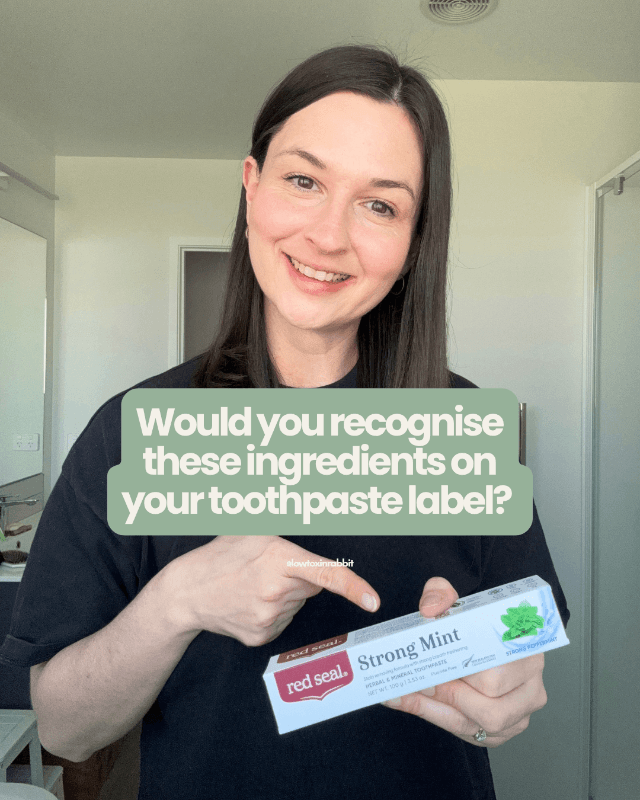
Sponsored by Red Seal. Red Seal has paid for this article and provided product and factual information. The experiences and preferences shared are my own.
Have you ever picked up a natural toothpaste, turned it over in your hand and wondered, "but does it actually work?" You're definitely not alone. It's a question I've asked myself a lot too.
For years, toothpaste went into my trolley without a second thought. I just grabbed whatever was on special. It wasn't until I started my low tox journey and began reading the back of everything that I realised I'd never once looked at what was in the tube we were using twice a day. And when I did start looking at natural options, there was a little voice asking whether I'd be giving something up. Would it taste strange? Would it feel like brushing with a twig? (Funnily enough, people really did use twigs, but more on that later!)
But "does it work?" isn't the most helpful question to ask in the toothpaste aisle. A better one is: why are herbal and mineral ingredients used in toothpaste in the first place? Once you understand that, the ingredient list, the certification logos and the way a brand formulates its products all start to make a lot more sense.
So, let's take a closer look at the why!
Related Reading
Why Do So Many of Us Assume Natural Means Compromise?
Many people assume natural products require some kind of trade-off. Maybe it's the texture, maybe the flavour, maybe the vague sense that the "real" toothpaste must be the one with the long, unfamiliar ingredient names.
Part of it is simply habit. We trust what's familiar. Part of it is that the word "natural" gets used so loosely that it's hard to know what's behind it. As I covered in my natural toothpaste guide, there's no single legal definition of "natural" in personal care in New Zealand, so the word alone can describe very different products.
At the same time, more of us are reading ingredient lists and looking for certifications. Many of us are looking for products that align with our values and everyday preferences, and we want to feel confident about what we're choosing rather than just hopeful.
Why Are Herbal and Mineral Ingredients Used in Toothpaste?
Here's the bit that surprises most people: every toothpaste, whatever it says on the front, is built from the same basic jobs. It needs something to give it texture, something to keep it from drying out, something to hold it together, something to help it foam, and something to make it taste nice.
Herbal and mineral ingredients are used because they can fill those roles. Minerals like calcium carbonate have been part of tooth powders and pastes for a very long time. Plant oils like peppermint and aniseed bring flavour.
A natural toothpaste isn't a different category of thing. It's still a toothpaste. The difference is in which ingredients have been selected to do each job, and the standards they've been chosen against.
How Long Have Natural Ingredients Been Used in Oral Care?
Many people are surprised to learn that herbal and mineral ingredients have a long history of use in oral care. Long before tubes and supermarket shelves, people were caring for their teeth with what they could find around them.
Chew sticks. Remember that twig? Chewed twigs, including the miswak from the Salvadora persica tree, have been used for centuries across the Middle East, Africa and South Asia, and are still used today.
Tooth powders. An Egyptian papyrus from around the fourth century AD records a tooth powder recipe using rock salt, mint, dried iris flower and pepper. Salt, herbs and ground minerals turn up again and again in historical oral care.
Chalk and baking soda. By the 1800s, tooth powders based on chalk (calcium carbonate) and bicarbonate of soda were common household items, well before toothpaste in a tube became the norm towards the end of that century.
Herbal traditions. Plants like mint, clove and aniseed have long been used to flavour oral care preparations in many cultures.
This history shows that herbal and mineral ingredients aren't a new trend dreamed up by a marketing team. They were being used long before toothpaste as we know it existed. Many of them are the original ingredients in oral care, refined and formulated into the toothpaste we use today.
What Does Each Ingredient in a Natural Toothpaste Actually Do?
Different ingredients are chosen for different purposes. Once you know the roles, an ingredient list becomes a lot less cryptic. Here are some common ingredients you'll find across different natural toothpastes and what they are used for:
On the label | What it is | Its role in the paste |
Aqua / Water | Water | The base that brings everything together |
Calcium Carbonate | A mineral, the main component of chalk | Mild abrasive that gives a polishing texture |
Dolomite | A calcium and magnesium carbonate mineral | Mild abrasive and texture |
Hydrated Silica | A mineral derived from silica | Mild abrasive and texture |
Sodium Bicarbonate | Baking soda | Mild abrasive with a familiar clean-feeling taste |
Hydroxyapatite | A calcium phosphate mineral found in tooth enamel | A mineral ingredient that supports enamel remineralisation and brightens teeth |
Sodium Monofluorophosphate | A source of fluoride | Included in fluoride formulations |
Glycerin | A humectant | Stops the paste drying out |
Sorbitol | A sugar alcohol | Humectant that keeps the paste smooth |
Xanthan Gum | A thickener produced by fermentation | Holds the paste together |
Bentonite | A natural clay mineral | Adds body and helps give the paste its texture |
Lauryl Glucoside | A mild surfactant made from sugar and fatty alcohols | Helps the paste foam and spread |
Sodium Cocoyl Glutamate | A mild foaming agent from coconut and an amino acid | Helps the paste lather |
Xylitol | A sugar alcohol | Used as a sweetener to provide a pleasant taste without sugar. |
Stevioside | The sweet compound from the stevia plant | Sweetener |
Mentha Piperita (Peppermint) Oil | Peppermint essential oil | Flavour |
Menthol | The cooling compound found in mint | Cool, fresh taste |
Eucalyptus Globulus Leaf Oil | Eucalyptus essential oil | Flavour |
Illicium Verum (Anise) Fruit/Seed Oil | Star anise oil | Flavour |
Aloe Barbadensis (Aloe Vera) Leaf Juice | Juice from the aloe vera leaf | A plant ingredient included in some formulas |
Propolis Extract | A resin-like material collected by bees | A gentle ingredient for healthy gums |
Sea Salt | Salt | A mineral with a long history in tooth powders |
Totarol | An extract from the New Zealand tōtara tree | A native botanical ingredient |
When you look at it like this, you can see that a formulator isn't picking ingredients because they sound nice. Each one is there to do something specific, and the question is which ingredient they've chosen for that role.
Natural or Synthetic: Is That the Right Question?
This is the part I really want people to take away. How well a toothpaste works isn't decided by whether its ingredients are natural or synthetic. What really makes the difference is the thought that goes into the formula.
A toothpaste is more than a list of good-sounding ingredients. Every one is in the tube for a reason, and a good formulator weighs up which ingredient to use, how much of it, and how it works with everything else. Getting a paste that holds its texture, tastes pleasant, stays stable and meets a defined standard takes real care.
A formulator working to a natural standard has an extra layer of decisions to make. Each role in the paste has to be filled with ingredients that meet the standard's criteria, which calls for more careful selection. When a brand does that well, it shows in how openly they're willing to talk about it.
That's where certifications and ingredient transparency come in. They let you see what a brand has chosen and the standards it's been held to, so you're not left guessing from the front of the box.
How Does Certification Take the Guesswork Out?
If formulation is the "how", certification is the "who checked?"
An independent certification means a third party with no commercial buy in has assessed a product against a published standard. It's the difference between a brand saying something about itself and someone else confirming it.
NATRUE is one of the certifications you'll see on natural toothpaste and personal care products here. It's an international non-profit association, and the certifying itself is carried out by separately accredited certifiers (in New Zealand, BioGro is a NATRUE approved certifier).
That's what a certification gives you that a word on the front of the box can't: independent verification of ingredient and formulation standards, and something you can look up rather than take on trust.
Common Questions About Natural Toothpaste
What Does SLS Free Toothpaste Mean?
SLS stands for sodium lauryl sulfate, a foaming agent that has been used in toothpaste for decades. An SLS free toothpaste simply uses a different ingredient to create lather.
Choosing an SLS free toothpaste is a preference for plenty of people, and it's one of the most common things I see the natural community checking for. In an SLS free formula you'll often see alternatives like sodium cocoyl glutamate or lauryl glucoside doing that job instead. The main thing you might notice is a softer, less bubbly foam, which is a texture difference worth giving a week to get used to.
What is Hydroxyapatite Toothpaste?
Hydroxyapatite is a calcium phosphate mineral, and it's the main mineral component of tooth enamel. It has been used in toothpaste in Japan since 1980, and hydroxyapatite toothpaste has become a popular choice here among people looking for a fluoride free option.
We love Red Seal's Baking Soda Hydroxyapatite Toothpaste, which combines sodium bicarbonate, hydroxyapatite and calcium carbonate with peppermint, eucalyptus and anise oils.
Why is Xylitol in Toothpaste?
Xylitol is a sugar alcohol found naturally in small amounts in many fruits and vegetables, and it's commonly produced from plant sources such as birch or corn. In toothpaste, it gives the paste a pleasant taste without using sugar, helping to create a more enjoyable brushing experience. Xylitol is a popular ingredient in oral care products because it provides sweetness while supporting a sugar-free formulation.
How Red Seal Approaches Its Toothpaste
Red Seal is a name many New Zealanders grew up with, and their toothpaste range is a good example of the approach I've been describing.
Carefully selected herbal and mineral ingredients. Red Seal formulates its toothpastes around herbal and mineral ingredients chosen for their role in the paste, from calcium carbonate, dolomite and bentonite clay to sea salt, peppermint and anise oils and totarol from our native tōtara tree.
NATRUE Certified Natural. Red Seal's toothpastes are certified natural to the NATRUE standard, so the formulations have been independently assessed against that published standard.
Choice within the range. There are fluoride, fluoride free and hydroxyapatite options, so you can choose what suits your household.
SLS free. SLS has been removed from Red Seal's NATRUE certified toothpastes.
Transparency you can check. Full ingredient lists are published on Red Seal's website, along with their heavy metals testing results. I always appreciate a brand that puts that information out there rather than making you ask.
Vegan and cruelty free. Many varieties are certified by the Vegan Society (the propolis ones can't be, as propolis is a bee product), and Red Seal doesn't test on animals.
Made in New Zealand.
What I like about this is that none of it asks you to take the front of the box on faith. The ingredients are listed, the certification can be looked up, and the standard can be found.
Choosing a Toothpaste That Fits How You Live
Do natural toothpastes work? I've stopped trying to answer that with a simple yes or no. Instead I look at what's in the tube, why each ingredient is there, and who has independently checked it.
For a long time I thought choosing products that lined up with my values meant accepting some kind of trade-off. What I've learned is that you don't need to choose between your values and the products you use every day. Herbal and mineral ingredients have been part of oral care for generations. Today, with thoughtful formulation, full ingredient lists and independent certifications like NATRUE, it's easier than ever to find a toothpaste you feel good about using.
Whether you're after an SLS free toothpaste, a fluoride or fluoride free toothpaste, or a hydroxyapatite toothpaste, the same three things apply. Read the ingredient list, look for a certification you can verify, and choose a brand that is open about what goes into its products. Red Seal ticks these boxes for us.
References
NATRUE. NATRUE approved certifiers. https://natrue.org/our-standard/natrue-approved-certifiers/
NATRUE. NATRUE certified world: Products database. https://natrue.org/natrue-certified-world/?database%5Btab%5D=products
NATRUE. NATRUE: The International Natural and Organic Cosmetics Association. https://natrue.org/
NATRUE. (2025). NATRUE label requirements (Version 3.9) [PDF]. https://natrue.org/uploads/2025/09/EN-NATRUE-Label_Requirements_v3.9-final-version-1.pdf
Red Seal. Frequently asked questions. https://www.redseal.global/nz/faqs-page/
Red Seal. NATRUE certified natural toothpaste. https://www.redseal.global/nz/natrue-certified-natural-toothpaste/
Red Seal. Red Seal baking soda hydroxyapatite toothpaste 100g. https://www.redseal.global/nz/our-products/oral-care/red-seal-baking-soda-hydroxyapatite-toothpaste-100g/
Red Seal. Red Seal complete care fluoride toothpaste 100g. https://www.redseal.global/nz/our-products/oral-care/red-seal-complete-care-fluoride-toothpaste-100g/
Red Seal. Toothpaste. https://www.redseal.global/nz/our-products/oral-care/toothpaste/
The Vegan Society. The Vegan Society. https://www.vegansociety.com/
Frequently Asked Questions
Do natural toothpastes actually work?
It helps to look at what a toothpaste is made of. Every toothpaste combines ingredients that each do a specific job, such as a mild abrasive, a humectant, a thickener, a foaming agent and flavour. A natural toothpaste fills those same roles using herbal and mineral ingredients chosen to meet a particular standard. Rather than natural versus conventional, the more useful things to look at are the formulation, the ingredient list and the certification behind it.
Why are herbal and mineral ingredients used in toothpaste?
Because they can fill the roles every toothpaste needs. Minerals like calcium carbonate give texture, plant oils provide flavour and plant-derived sweeteners balance the taste. Many of these ingredients have a long history of use in oral care.
Is a natural ingredient better than a synthetic one?
Not automatically. Different ingredients are chosen for different purposes, and whether an ingredient is natural or synthetic doesn't decide how a toothpaste performs. What matters is thoughtful formulation and the standards a product is held to.
Is natural toothpaste always fluoride free?
No. Natural and fluoride free are separate things. Some natural toothpastes contain fluoride and some don't, so check the ingredient list for sodium monofluorophosphate or sodium fluoride. Red Seal offers both fluoride and fluoride free toothpastes within its NATRUE certified range.
What is an SLS free toothpaste?
It's a toothpaste made without sodium lauryl sulfate, using a different foaming agent instead. Red Seal has removed SLS from its NATRUE certified toothpastes.
What is hydroxyapatite toothpaste?
It's a toothpaste that includes hydroxyapatite, a calcium phosphate mineral that is the main mineral component of tooth enamel. It's often chosen by people looking for a fluoride free option.
Why do some toothpastes contain xylitol?
In a xylitol toothpaste, xylitol is used as a sweetener to give the paste a pleasant taste without sugar. It's often paired with other sweeteners such as stevia.
How do I know a toothpaste is genuinely natural?
Look for an independent certification with a published standard, like NATRUE, and check the brand's website for the full ingredient list. NATRUE certified products are listed in a public database you can search yourself.
Do natural toothpastes taste different?
Often, yes. Flavours built on essential oils tend to taste more herbal and less sweet. Most people adjust within a week or so, and choosing a flavour your household enjoys can make a big difference.

People who viewed this also viewed
Non-Toxic Toys Guide: How to Choose Safe Toys for Kids
Toxins Lurking in Your Sunscreen: Ingredients to Avoid and Why I Choose Mineral Sunscreen
Best Baby Wipes 2025: Non-Toxic Picks and What to Avoid
The Best Non-Toxic Baby and Kids Dinnerware in NZ and AU
Why Go Organic? The Benefits of Choosing Organic Food
